Metal Building Insulation: Types and How Installation Works
· By DTF Metal Buildings · Metal Buildings
Why Insulation Matters in a Metal Building
Steel is an excellent conductor of heat, which means an uninsulated metal building in Texas turns into an oven in summer and an icebox in winter. Insulation does three jobs at once: it keeps temperatures comfortable, controls condensation that can rust your panels and ruin stored equipment, and cuts energy costs if you heat or cool the space.
The Main Types of Metal Building Insulation
Double Bubble Reflective Insulation
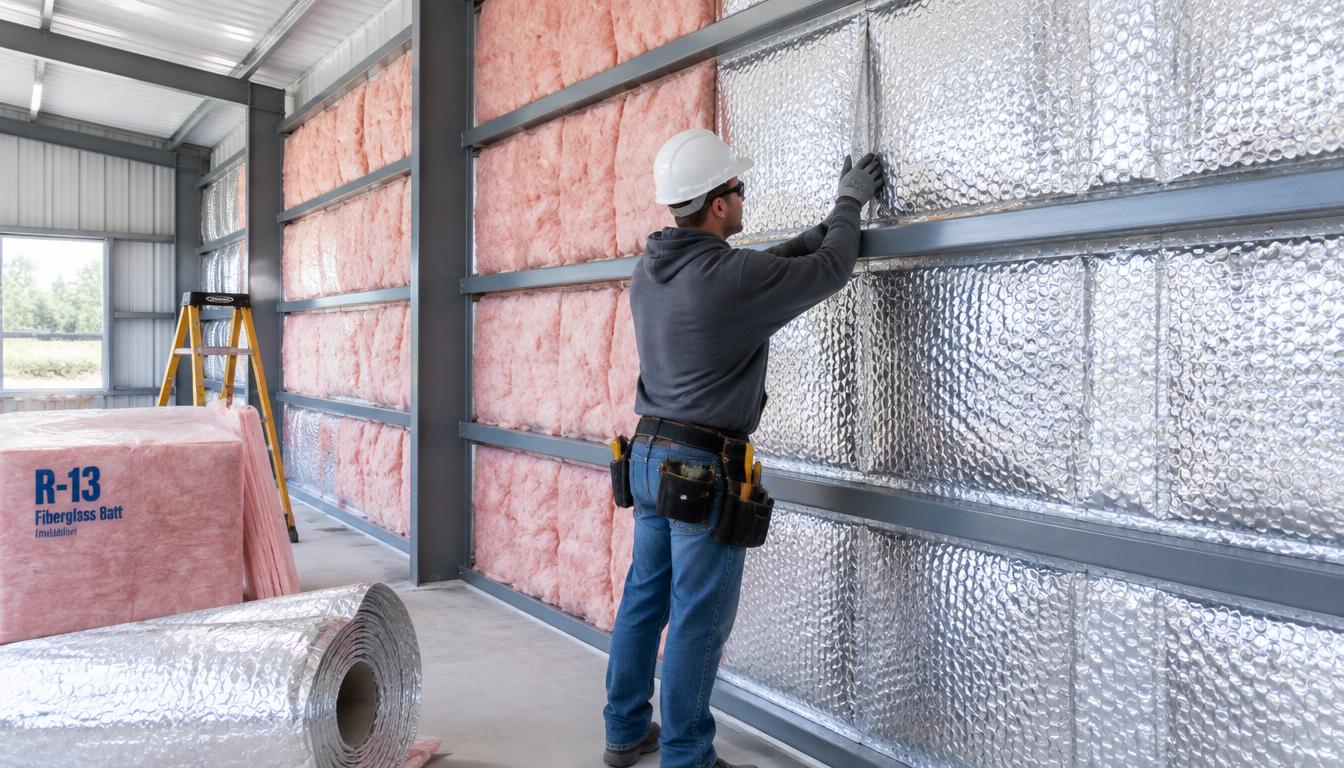
Double bubble is a reflective foil product with two layers of air bubbles sandwiched between foil faces. It is lightweight, inexpensive, and acts primarily as a radiant barrier and vapor retarder. It is a popular budget choice for barns and storage buildings where full climate control is not needed, and it is often installed between the roof panels and purlins during construction.
Fiberglass Batt Insulation
Fiberglass batts are the familiar pink or yellow rolls, typically R-13 to R-19 for walls and higher for roofs. In metal buildings, they are installed between the girts and purlins, usually with a vapor barrier facing the conditioned side. Fiberglass offers strong thermal performance for the price, but it must stay dry. If it gets wet from condensation or a leak, it loses R-value and can harbor mold.
Spray Foam Insulation
Spray foam is applied directly to the interior of the steel panels, where it expands to seal every gap, rib, and seam. Closed-cell spray foam delivers the highest R-value per inch, adds structural rigidity, and acts as its own vapor barrier, which makes it the top performer for barndominiums, workshops, and any conditioned space. It costs more up front but often pays for itself in energy savings. Our sister company, DTF Spray Foam, specializes in exactly this kind of installation.
Rigid Board Insulation
Rigid foam boards (polyiso, XPS, or EPS) are cut to fit between framing members or installed as continuous insulation. They offer good R-value per inch and resist moisture, but the seams must be taped and sealed carefully to prevent air leaks.
How Installation Works
The right installation method depends on whether the building is new or existing:
- New construction: Insulation is easiest and cheapest to install during the build. Double bubble or fiberglass can go in as the panels are installed, and spray foam is applied right after the shell is dried in.
- Existing buildings: Spray foam is usually the best retrofit option because it applies directly to the panels without removing them. Fiberglass can be added if you are also installing interior liner panels.
Do Not Forget the Vapor Barrier
Condensation is the silent killer in metal buildings. Warm, moist air hits the cool steel panel and water forms, dripping onto whatever is inside. A proper vapor barrier on the warm side of the insulation, with every seam sealed, is just as important as the insulation itself. This is one area where professional installation really earns its keep.
Which Type Is Right for You?
For a simple equipment barn, double bubble may be all you need. For a workshop you will heat and cool, fiberglass or spray foam makes sense. For a barndominium or any living space, closed-cell spray foam is the gold standard in the Texas climate.
Not sure which way to go? Request a free quote from DTF Metal Buildings and we will walk you through the options for your building, your budget, and how you plan to use the space.