Spray Foam Insulation for Metal Buildings: Costs & Types
· By DTF Metal Buildings · Metal Buildings
Spray Foam Insulation for Metal Buildings: Costs & Types
Metal buildings are tough, affordable, and quick to construct, but they have one major weakness: temperature control. Without proper insulation, steel structures turn into ovens in summer and freezers in winter, while condensation drips from every surface. That's where spray foam insulation for metal buildings comes in, offering a solution that tackles heat loss, moisture buildup, and energy costs all at once.
At Droptine Metal Buildings, we've spent over 15 years constructing steel structures across South Texas. Through our partnership with a dedicated spray foam insulation company, we've seen firsthand how the right insulation transforms a metal shell into a comfortable, efficient space. Whether you're building a workshop, warehouse, or barndominium, understanding your insulation options makes all the difference.
This guide breaks down everything you need to know about spray foam insulation for metal buildings, from open-cell versus closed-cell types to realistic cost expectations. You'll also get straight answers on whether DIY application makes sense or if hiring a professional is worth the investment.
What spray foam does in metal buildings
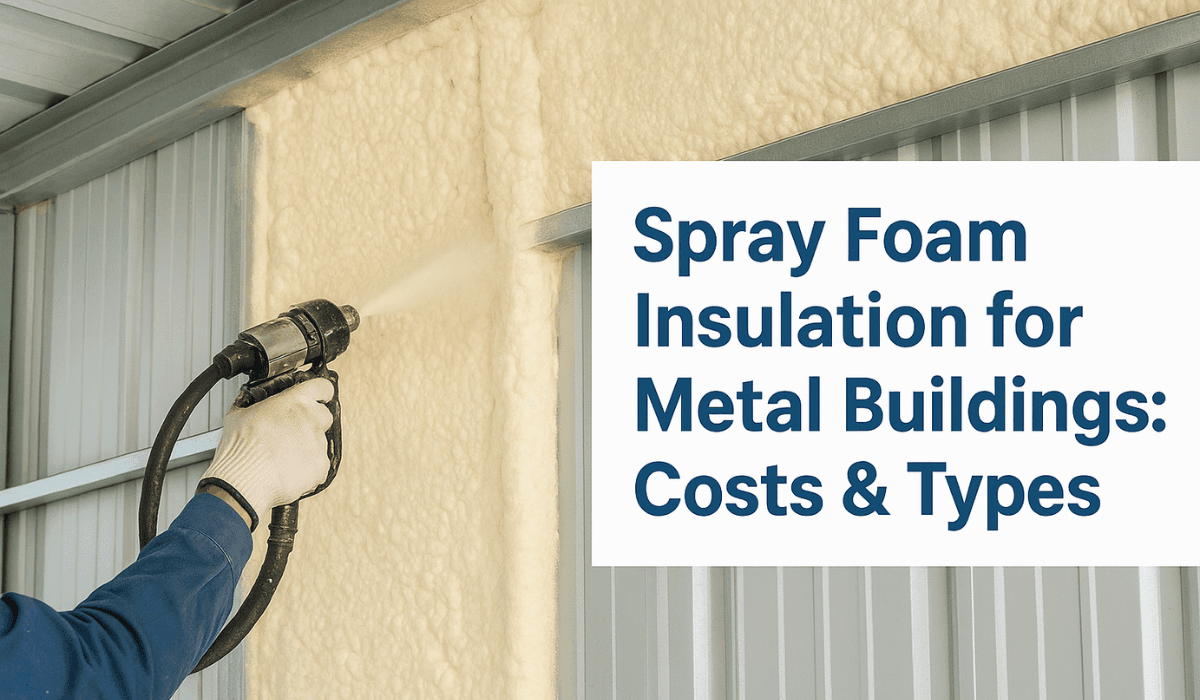
Spray foam insulation for metal buildings creates a seamless protective layer that bonds directly to steel surfaces. When applied, the liquid mixture expands rapidly to fill every gap, crevice, and corner, then hardens into a solid foam barrier. This process eliminates the air pockets and thermal bridges that plague traditional insulation methods like fiberglass batts or rigid panels.
Creates a continuous thermal barrier
The foam adheres directly to your metal panels and framing, forming an unbroken layer that stops heat transfer in both directions. During summer months, this barrier blocks radiant heat from the sun-baked roof and walls before it reaches your interior space. In winter, it prevents warmth from escaping through the steel shell, keeping your building comfortable without overworking HVAC systems.
You'll notice the difference immediately because spray foam eliminates cold spots and hot zones that develop in metal structures with conventional insulation. The expansive nature of the material means it seals around structural components, fasteners, and seams where other insulation types leave gaps. This complete coverage translates to consistent temperatures throughout your space, regardless of where you stand or what equipment you're operating.
Stops moisture and condensation
Metal buildings face a constant battle against condensation buildup, which occurs when warm, humid air contacts cold steel surfaces. Spray foam acts as both insulation and a vapor barrier, preventing moisture-laden air from reaching the metal. Closed-cell foam particularly excels at this because its dense cell structure blocks water vapor transmission almost entirely.
Without proper moisture control, condensation leads to rust, mold growth, and damaged stored materials within just a few seasons.
Your building stays dry because the foam maintains surface temperatures above the dew point, the critical threshold where water vapor condenses into liquid. Traditional insulation materials like fiberglass can absorb moisture and lose effectiveness, but spray foam remains unaffected by humidity. This moisture resistance protects your investment, inventory, and equipment from water damage while extending the lifespan of the steel structure itself.
Adds structural rigidity
Beyond thermal performance, spray foam increases the overall strength of your metal building. When the foam cures, it creates a rigid connection between panels and framing members, effectively gluing the structure together. This added stiffness helps your building resist wind loads, vibrations, and panel flutter during storms or high-wind conditions.
The structural benefits become particularly valuable in large-span buildings or areas with severe weather. Metal panels that might otherwise flex or rattle under wind pressure stay firmly in place thanks to the foam backing. You'll also experience reduced noise transmission since the foam dampens sound vibrations traveling through the steel, making workshops and warehouses noticeably quieter. This combination of thermal insulation, moisture control, and structural enhancement makes spray foam a multi-functional solution rather than just an energy-saving measure.
Why metal buildings need spray foam insulation
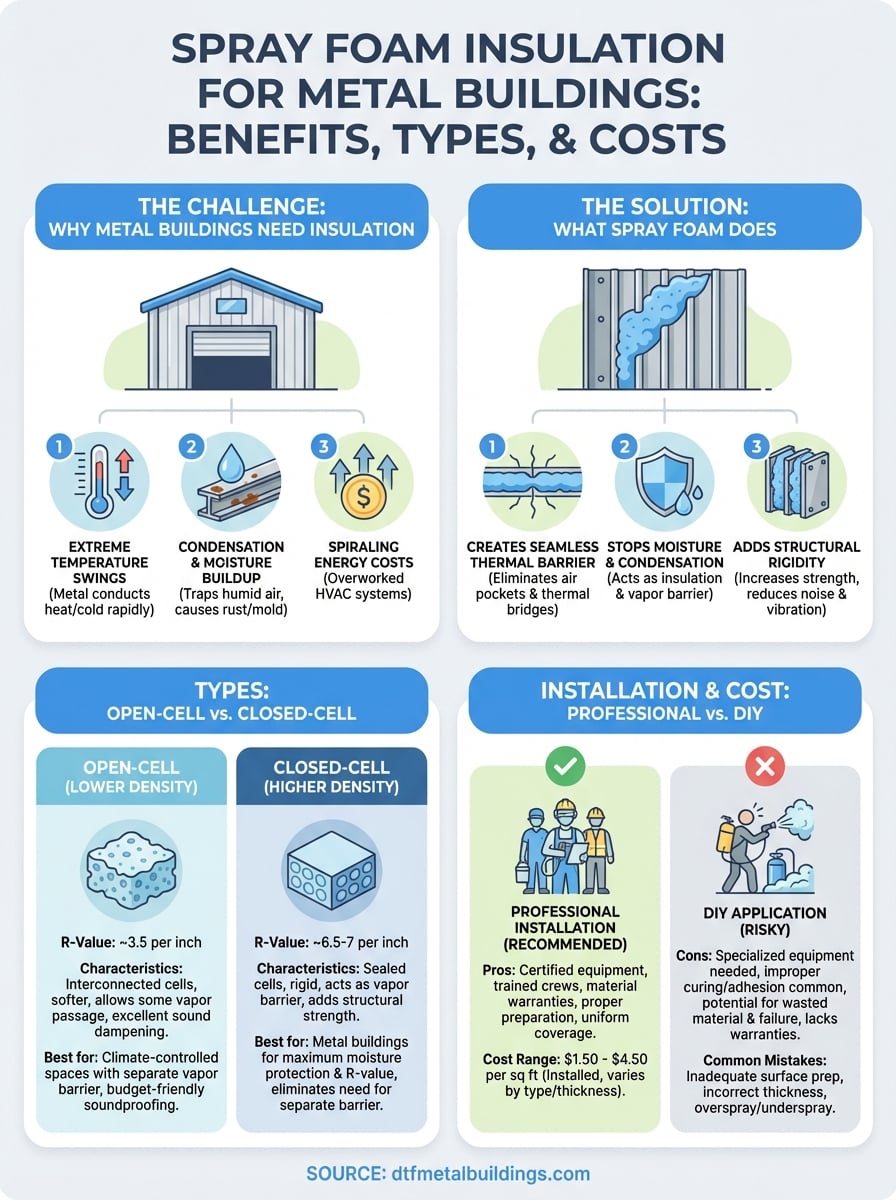
Steel structures face unique challenges that make standard insulation methods inadequate. The thermal properties of metal create extreme temperature swings, while the non-porous surface traps moisture against cold steel panels. These factors combine to produce condensation, energy waste, and uncomfortable interior conditions that spray foam insulation for metal buildings specifically addresses.
Metal conducts heat rapidly
Your steel panels act like giant heat conductors, transferring outdoor temperatures directly into your building. This thermal conductivity means a sun-baked roof can reach 150 degrees Fahrenheit or higher, radiating heat downward for hours after sunset. In winter, that same roof pulls warmth out of your space faster than most heating systems can replace it.
Traditional insulation materials struggle because they don't seal against the metal surface completely. Fiberglass batts sag over time, leaving gaps where steel contacts the interior air directly. These exposed areas become thermal bridges that bypass your insulation entirely, creating hot spots in summer and cold zones in winter that make temperature control nearly impossible.
Condensation damages the structure
When warm, humid air inside your building contacts cold metal surfaces, water droplets form immediately. This condensation appears most visibly on roof panels during early morning hours, but it happens continuously inside wall cavities and around structural members. Over months and years, this trapped moisture causes rust, weakens connections, and creates an environment where mold thrives.
Metal buildings in humid climates can experience condensation damage within the first year of operation without proper moisture barriers.
You'll find water stains on stored materials, puddles along wall bases, and rust forming on fasteners and framing. The problem worsens as temperature differences increase, making uninsulated metal buildings particularly vulnerable during spring and fall when day-night temperature swings peak.
Energy costs spiral without proper insulation
Your HVAC system works overtime trying to maintain comfortable temperatures in an uninsulated metal shell. During summer, air conditioning units run continuously as heat radiates through the roof and walls. Winter heating bills climb even higher because metal panels lose warmth to cold outdoor air at an alarming rate, forcing furnaces into near-constant operation just to maintain basic comfort levels.
Open-cell vs closed-cell foam for metal buildings
Choosing between open-cell and closed-cell spray foam determines your building's performance, cost, and moisture protection level. These two types differ fundamentally in their cell structure, density, and R-value per inch, which directly impacts how well they protect your metal structure from temperature extremes and condensation. Understanding the trade-offs helps you select the right option for your specific climate and budget.
Open-cell foam characteristics
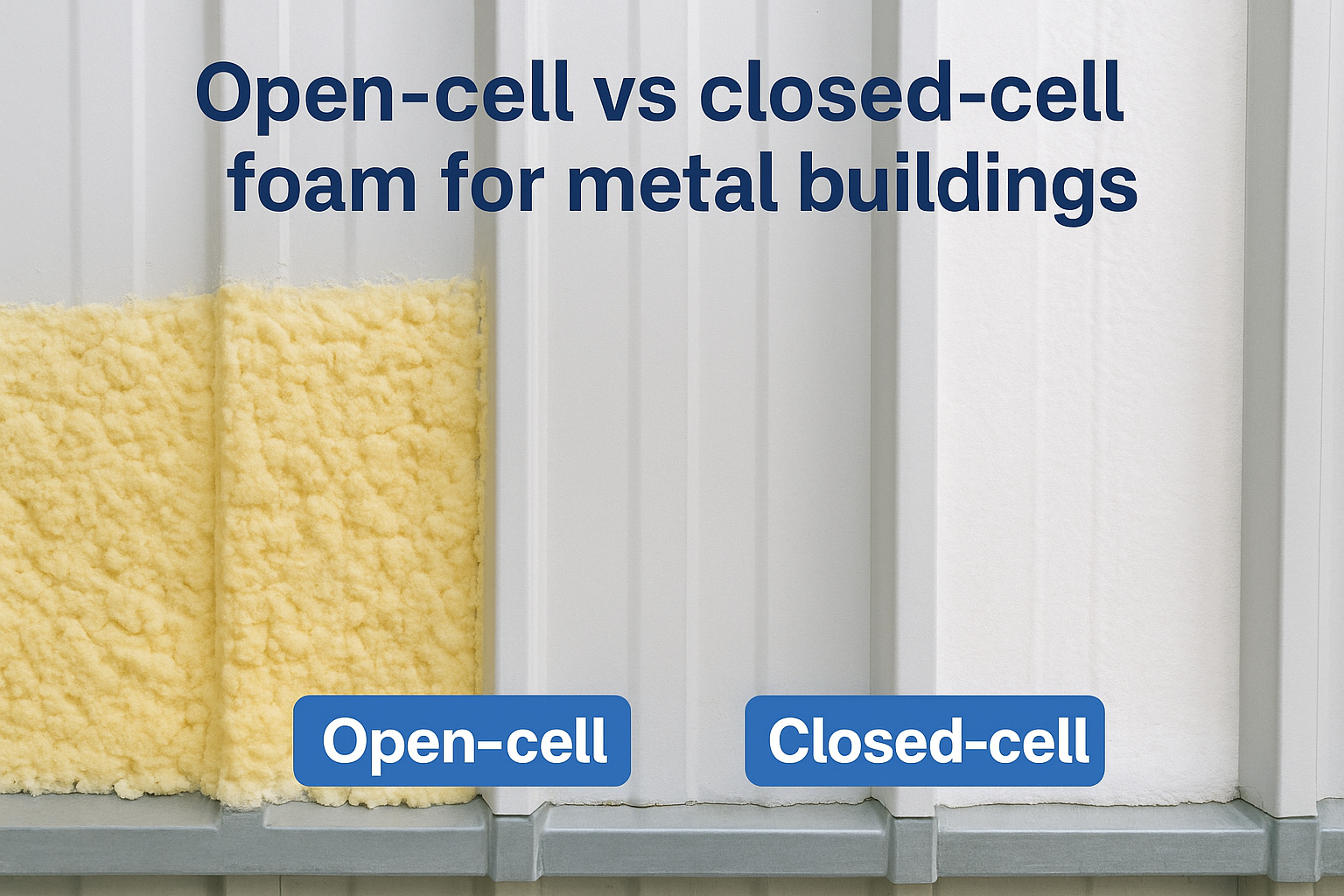
Open-cell spray foam expands rapidly during application, reaching a final density of about 0.5 pounds per cubic foot. The cells remain interconnected rather than sealed, creating a spongy texture that provides an R-value of roughly 3.5 per inch. This lighter foam costs less per board foot and offers excellent sound dampening for noisy workshops or equipment spaces.
You'll find open-cell foam works well in climate-controlled metal buildings where moisture control happens through mechanical ventilation. The material allows some water vapor to pass through, which means you need a separate vapor barrier in humid environments. Temperature fluctuations matter less in conditioned spaces, making the lower R-value acceptable when heating and cooling systems run consistently.
Closed-cell foam benefits for steel structures
Closed-cell foam cures into a rigid, dense material at 2 pounds per cubic foot with completely sealed cells. This structure delivers an R-value of 6.5 to 7 per inch, doubling the insulating power of open-cell foam in the same thickness. The dense cell structure also acts as a vapor barrier, preventing moisture from reaching your metal panels entirely.
Metal buildings benefit most from closed-cell foam because it addresses condensation and thermal transfer simultaneously. Your steel structure stays protected from rust while maintaining consistent interior temperatures with less material thickness. The foam adds structural rigidity to panels and framing, helping your building resist wind loads and vibration better than open-cell alternatives.
Closed-cell spray foam insulation for metal buildings costs more upfront but eliminates the need for separate vapor barriers and delivers superior moisture protection in one application.
Budget constraints sometimes push builders toward open-cell foam, but closed-cell foam pays back the difference through lower energy bills and eliminated condensation damage. Your choice ultimately depends on whether you need maximum moisture protection and R-value or if a climate-controlled space with mechanical ventilation makes the lighter, less expensive option viable.
How much spray foam insulation costs
Spray foam insulation for metal buildings typically costs between $1.50 and $4.50 per square foot installed, depending on the foam type, thickness, and building size. Your total project expense varies significantly based on whether you choose open-cell or closed-cell foam and how many inches of coverage you need for your climate zone. Understanding these price factors helps you budget accurately and avoid surprises during the bidding process.
Open-cell foam pricing
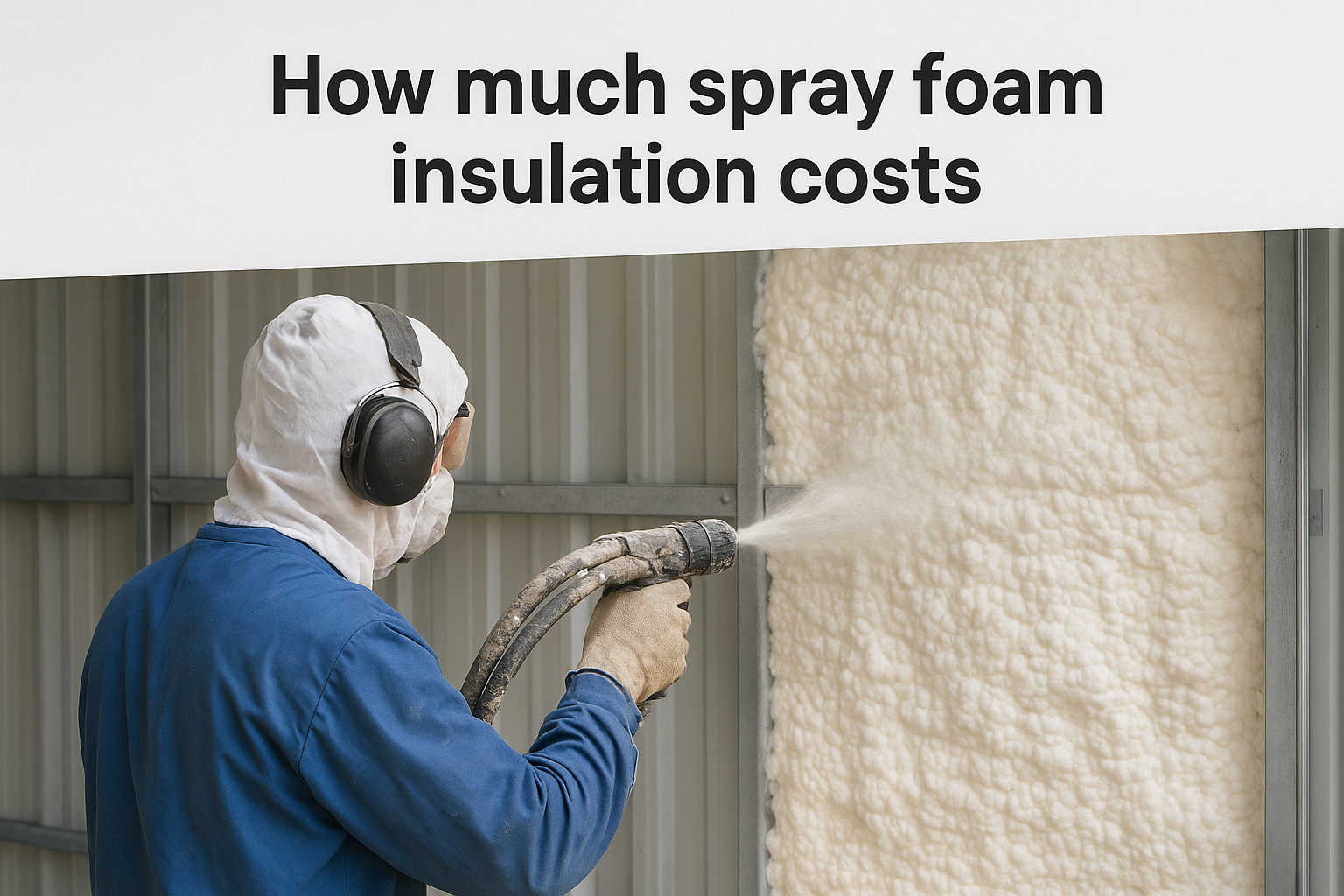
Open-cell spray foam runs $1.50 to $2.50 per square foot for a standard 3-inch application. A 2,000 square foot metal building needs roughly $3,000 to $5,000 in materials and labor when using open-cell foam throughout. You'll save money upfront, but remember this option requires additional vapor barrier installation in humid climates, which adds $0.30 to $0.50 per square foot to your final bill.
Closed-cell foam costs
Closed-cell foam costs $2.50 to $4.50 per square foot for a 2-inch application that delivers similar R-value to 3 inches of open-cell. That same 2,000 square foot building requires an investment of $5,000 to $9,000 depending on your location and contractor rates. The higher price includes built-in vapor barrier protection and superior moisture control without additional materials.
Professional spray foam installation typically represents 50-60% of the total cost, with materials making up the remaining 40-50%.
Factors that affect your total price
Your building height directly impacts labor costs since tall walls or steep roof pitches require scaffolding and additional safety equipment. Contractors charge more for projects under 1,000 square feet because setup and equipment costs remain constant regardless of building size. Regional labor rates vary widely, with urban areas typically charging 15-30% more than rural contractors for identical work.
Foam thickness requirements depend on your climate zone and intended building use. You'll need thicker applications in extreme temperature regions, which increases both material costs and installation time. Buildings with complex shapes, numerous penetrations, or difficult access points also cost more because spray technicians work slower around obstacles and in tight spaces.
DIY vs professional installation and common mistakes
Spray foam insulation for metal buildings requires specialized equipment and training that most property owners don't possess. While DIY kits exist for small projects, the pressurized spray equipment needed to coat an entire metal building costs $3,000 to $15,000 to purchase. Professional installers also carry liability insurance covering potential fire hazards during application and warranty guarantees that DIY work lacks entirely.
Why DIY rarely works for metal buildings
Your metal building presents unique challenges that make amateur installation risky. The foam must bond directly to steel surfaces at specific temperatures, typically between 60 and 90 degrees Fahrenheit, while maintaining proper chemical ratios throughout application. Temperature fluctuations cause improper curing or poor adhesion, leaving gaps where moisture penetrates and condensation forms.
Equipment rental might seem affordable at $200 to $400 per day, but first-time applicators waste significant material learning proper spray technique. You need consistent coverage thickness across hundreds or thousands of square feet, which requires steady hand pressure and uniform spray patterns that take years to master. Mistakes mean scraping off failed foam and starting over, which quickly exceeds what professional installation would have cost initially.
Common installation mistakes to avoid
Inadequate surface preparation causes the most frequent failures. Your steel panels must be completely clean and dry before foam application, yet many installers skip thorough degreasing and dust removal. Any contaminants prevent proper bonding, creating air pockets where condensation accumulates behind the foam layer.
Professional installers prepare surfaces with industrial cleaners and verify complete dryness using moisture meters before spraying a single square foot.
Incorrect foam thickness creates another major problem. You need uniform coverage depth to achieve rated R-values, but eyeballing thickness leads to thin spots that compromise insulation performance. Overspray wastes expensive material while underspray leaves thermal bridges that reduce energy efficiency by 30% or more.
When to hire professionals
Licensed spray foam contractors bring certified equipment, trained crews, and material warranties that protect your investment. Your building benefits from proper ventilation during application, fire safety protocols, and post-installation inspections that verify complete coverage. Professional work typically includes a 10 to 25-year warranty covering adhesion failures, settling, or moisture penetration that DIY applications never guarantee.
Final takeaways
Spray foam insulation for metal buildings solves the fundamental challenges that plague steel structures: temperature extremes, moisture damage, and energy waste. Closed-cell foam delivers superior protection for most applications, offering both insulation and vapor barrier properties in one application. Open-cell foam works when you need budget-friendly sound dampening in climate-controlled spaces with separate moisture management.
Professional installation costs more upfront but eliminates the risks of improper bonding, inadequate coverage, and voided warranties that come with DIY attempts. Your metal building deserves proper surface preparation and uniform application that only trained crews with specialized equipment can provide. The investment pays back through lower energy bills, eliminated condensation damage, and comfortable interior conditions year-round.
At Droptine Metal Buildings, we've helped South Texas property owners protect their steel structures for over 15 years. Our partnership with professional insulation specialists means your project gets expert attention from design through completion. Contact us today for a 24-hour quote on your next metal building project.