What Happens If You Build Without A Permit? Risks & Costs
· By DTF Metal Buildings · Metal Buildings
You found the perfect spot for a new metal garage, workshop, or barndominium on your South Texas property. The temptation to skip paperwork and start building right away is real, but what happens if you build without a permit? The short answer: it can cost you far more than the permit fee you tried to avoid. From hefty fines to forced demolition, the consequences catch up with unpermitted construction sooner or later.
At Droptine Metal Buildings, we've spent over 15 years helping property owners across South Texas build the right way, licensed, insured, and fully permitted. We've seen firsthand what happens when people cut corners, and the cleanup is always more expensive than doing it correctly from the start.
This article breaks down the real risks you face when building without permits, including legal penalties, insurance problems, and what it means for selling your property down the road. If you're planning any construction project, this is information you can't afford to skip.
Why permits matter and when you need one
Building permits exist to protect you, your property, and your neighbors. When you pull a permit, your local building department reviews your plans to verify the structure meets current safety codes and zoning requirements. Inspectors then visit your job site at critical stages to confirm the work matches those approved plans. This process catches structural problems, electrical hazards, and foundation issues before they become expensive disasters or safety risks.
What building permits actually do
Permits create a documented record that your construction follows both state building codes and local ordinances. The inspection process confirms your contractor installed everything correctly, from foundation footings to electrical wiring. You also get legal proof that your structure exists and was built to code, which becomes critical when you sell your property or file an insurance claim. Without that permit record, you're gambling with tens of thousands of dollars in property value.
Permits protect your investment by ensuring the work meets minimum safety standards and can pass inspection when you sell.
Common projects that require permits in Texas
Most Texas counties require permits for any structural construction or addition to your property. This includes metal buildings, barndominiums, garages, workshops, carports, and permanent storage structures. You'll also need permits when you dig foundations, pour concrete slabs, run new electrical service, or install plumbing. Major renovations that affect load-bearing walls or change the footprint of existing structures trigger permit requirements too. Fence installation over a certain height typically needs approval, though the exact threshold varies by county.
Even though what happens if you build without a permit might seem like a distant problem, your local building department tracks construction activity through utility connections, aerial surveys, and neighbor reports. The permit requirement exists regardless of your property size or rural location.
Projects that typically don't need permits
Minor repairs and maintenance work usually don't require permits in most South Texas jurisdictions. Replacing existing roofing, painting, or fixing broken components on existing structures falls into this category. Small detached sheds under a specific square footage threshold sometimes get exempted, but you need to verify your local rules because limits vary significantly between counties. Decorative landscaping, temporary storage units on wheels, and cosmetic improvements generally skip the permit process.
The confusion comes when property owners assume rural locations or agricultural exemptions eliminate permit requirements entirely. That's rarely true. Before starting any construction project, contact your county building department directly and describe exactly what you plan to build. A five-minute phone call prevents expensive mistakes later.
What can happen if you build without a permit
The consequences of unpermitted construction stack up fast and hit your wallet hard. When inspectors discover your unpermitted metal building or addition, you face immediate stop-work orders that freeze your project until you fix the violations. The costs multiply from there, with financial penalties, legal complications, and long-term property problems that follow you for years. Understanding what happens if you build without a permit helps you make informed decisions before breaking ground on any construction project.
Financial penalties and daily fines
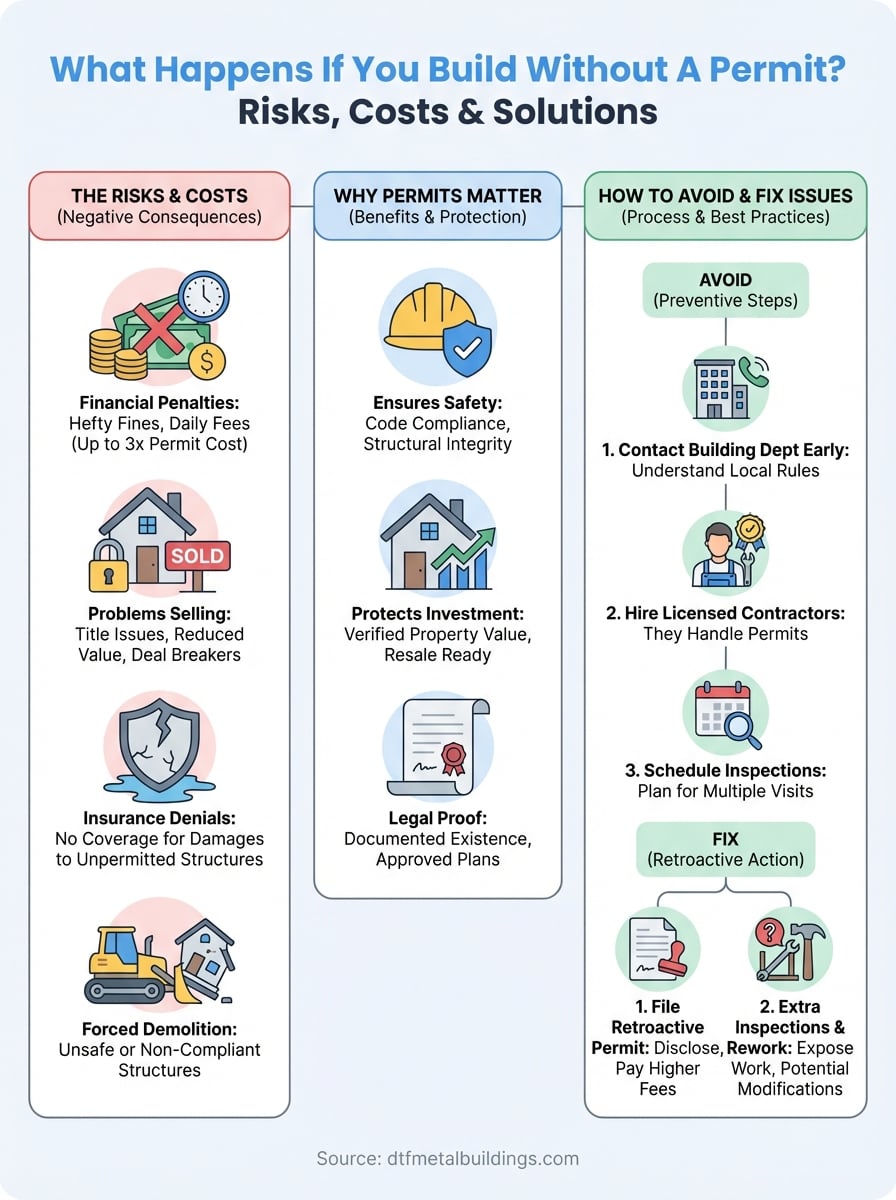
Your local building department can impose fines ranging from $500 to $5,000 for unpermitted work, depending on the violation severity and your county ordinances. Some jurisdictions charge daily accumulating penalties until you obtain the proper permits and pass inspections. You'll also pay double or triple permit fees when you file retroactively, plus additional costs for engineering reports and detailed plans that document your completed work. Stop-work orders shut down your construction immediately, leaving your project exposed to weather damage while you scramble to get compliant.
Problems selling your property
Unpermitted structures create title transfer problems that derail property sales. Your buyer's lender typically requires proof that all structures meet code and have proper permits before approving the mortgage. You'll either need to remove the unpermitted building, obtain after-the-fact permits and inspections, or accept a significantly reduced sale price that accounts for the risk. Many buyers walk away entirely when they discover permit issues during due diligence.
Unpermitted construction becomes your problem to solve before closing, often costing thousands in retroactive permits and potential demolition.
Insurance claim denials
Your homeowner's insurance policy can deny coverage for damage to unpermitted structures or even cancel your entire policy when discovered. If that unpermitted workshop causes electrical damage to your main house, your insurer may refuse the claim because the root cause violated building codes. You're gambling your property protection every day an unpermitted structure stands on your land.
How cities and counties find unpermitted work
Your local building department has multiple ways to discover construction happening without permits, and these detection methods have become increasingly sophisticated. Building inspectors combine traditional inspection routes with modern technology to identify unpermitted structures across their jurisdictions. Understanding how enforcement works helps you realize why what happens if you build without a permit is not a question of "if" but "when" you get caught.
Aerial surveillance and satellite imagery
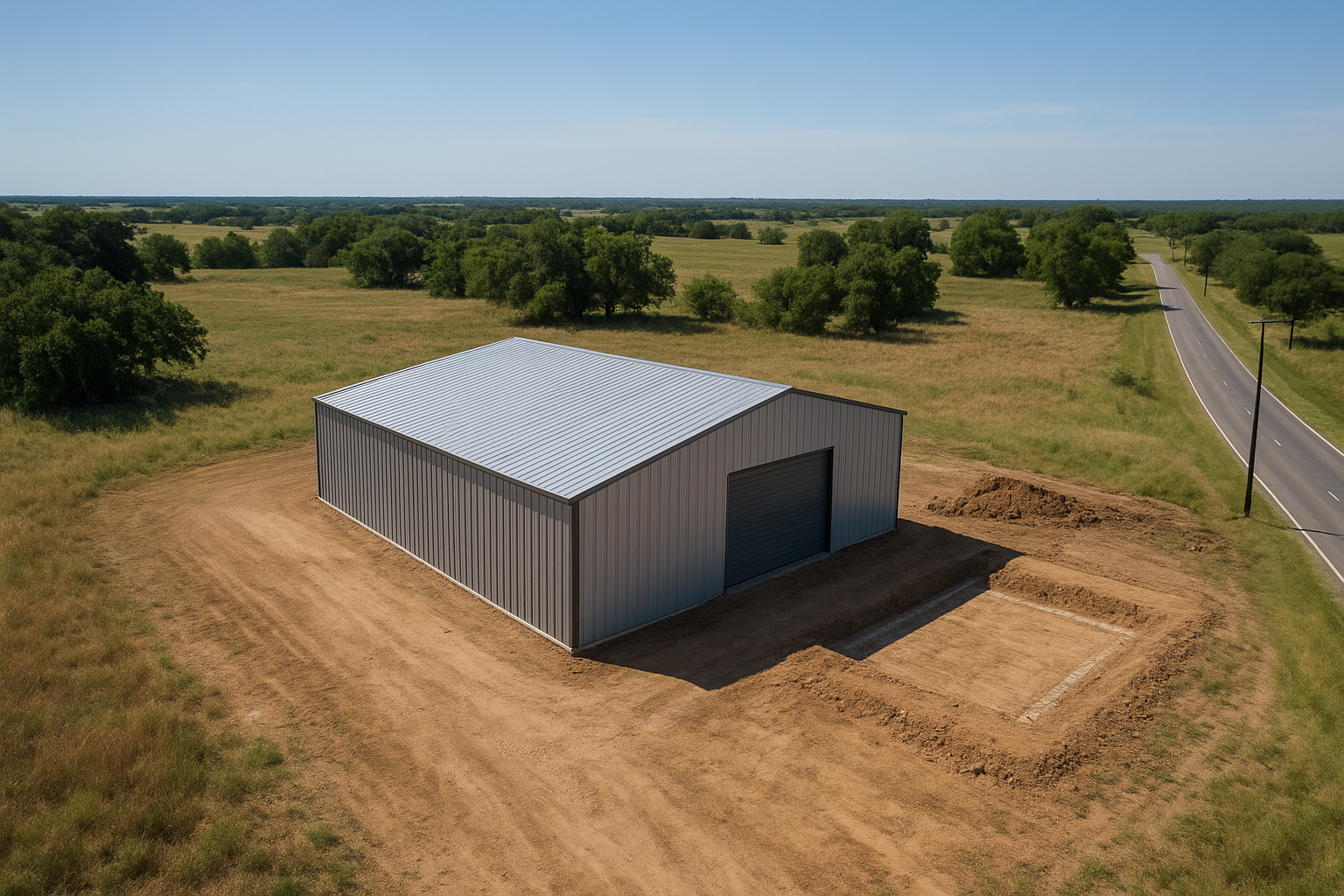
Counties routinely review aerial photographs and satellite imagery from services like Google Earth to compare property changes over time. Building departments can spot new structures, additions, and even foundation work from these overhead views. Many Texas jurisdictions now use drone surveys and automated change detection software that flags new construction for investigation. Your metal building shows up clearly in these images, especially in rural areas where large structures stand out against the landscape.
Utility connection records
When you request electrical service, water hookups, or septic system installations for your new structure, utility companies share this information with building departments. These connection requests trigger automatic permit verification checks in most counties. Inspectors cross-reference utility applications against their permit database and follow up on any discrepancies they find. You can't operate a functional building without utilities, and that paper trail leads directly to your unpermitted work.
Building departments cross-reference utility connections with permit records, making it nearly impossible to hide new construction long-term.
Neighbor complaints and routine inspections
Your neighbors notice construction activity and report unpermitted work to county officials more often than you might expect. Property line disputes, noise complaints, or simple curiosity prompt these reports. Building inspectors also conduct routine drive-by surveys in their jurisdictions and investigate any construction they spot without corresponding permit records. Code enforcement officers respond to every complaint and verify permit status on active construction sites.
How to fix unpermitted work after the fact
Discovering unpermitted construction on your property requires immediate action to minimize legal and financial damage. The retroactive permit process involves more documentation, higher fees, and additional inspections compared to obtaining permits before construction. You'll work directly with your county building department to bring the structure into compliance, though what happens if you build without a permit determines whether you can salvage the work or need to start over.
Filing for retroactive permits
Contact your county building department immediately and disclose the unpermitted structure before they discover it through enforcement. You'll need to submit detailed plans that document the existing construction, often requiring a licensed engineer to create as-built drawings that show what you actually built. Your application goes through the same review process as new permits, with inspectors verifying the structure meets current building codes. Building officials may require additional structural reinforcements or modifications to bring the work up to standard before they approve your retroactive permit.
The retroactive permit process costs two to three times more than obtaining permits before construction, plus engineering fees for documentation.
Costs and potential requirements
Expect to pay double or triple the standard permit fees as penalties for unpermitted work. You'll also cover engineering report costs ranging from $1,500 to $5,000 depending on structure complexity. Inspectors may require you to expose covered work for verification, meaning you'll remove drywall, dig up foundations, or open walls to prove the construction meets code. Some violations require complete demolition when the structure cannot meet current safety standards or sits in zoning-restricted areas. The total cost of retroactive compliance typically runs three to five times higher than getting permits upfront.
How to avoid permit issues on your next build
The smartest way to avoid what happens if you build without a permit is to make permits part of your project from day one. Planning ahead prevents delays, saves money, and protects your property investment. Your construction timeline should include permit application and inspection periods as standard phases, not optional steps you skip to save time.
Start with your county building department
Call your local building department before you finalize any construction plans and describe exactly what you intend to build. Ask specific questions about permit requirements, setback distances from property lines, height restrictions, and required inspections. Different counties enforce different rules, and what applies in one jurisdiction may not apply 20 miles away. The building department staff answer these questions daily and can save you expensive mistakes with a brief conversation. Request a copy of your local building code requirements and keep those documents with your project files.
Contact your building department before you design your structure, not after you've already ordered materials or started construction.
Work with licensed and insured contractors
Licensed contractors understand permit requirements and build them into their project bids automatically. They handle the paperwork, schedule inspections, and ensure the work meets code at every stage. Your contractor's license number goes on the permit application, creating accountability for quality workmanship that protects you long after construction finishes. Verify their license status directly with your state licensing board before signing any contracts.
Build inspection timelines into your schedule
Plan for multiple inspection visits throughout construction, not just a final walkthrough. Foundation inspections happen before you pour concrete, framing inspections occur before you close walls, and electrical inspections verify safe wiring before you connect power. Schedule these inspections as you complete each phase and never cover work until an inspector approves it.
Quick recap and next steps
Understanding what happens if you build without a permit protects you from financial penalties, insurance claim denials, and property sale complications that cost thousands more than permit fees. Counties discover unpermitted work through aerial surveillance, utility connection records, and neighbor reports, making it nearly impossible to hide construction long-term. The consequences escalate quickly once enforcement officials identify violations on your property.
Your best approach starts with contacting your building department before construction begins and working with licensed contractors who handle permits as standard practice. Building inspection timelines into your project schedule prevents costly delays and ensures your structure meets current safety codes. Retroactive permits cost two to three times more than doing it right from the start.
Droptine Metal Buildings handles all permit requirements for your South Texas construction project, from initial applications through final inspections. Our 15 years of local expertise and 100% satisfaction guarantee mean your metal building or barndominium stays compliant and protects your investment. Contact us today for a free quote on your next properly permitted building project.