Barndominium Construction Financing Options
· By DTF Metal Buildings · Barndominiums
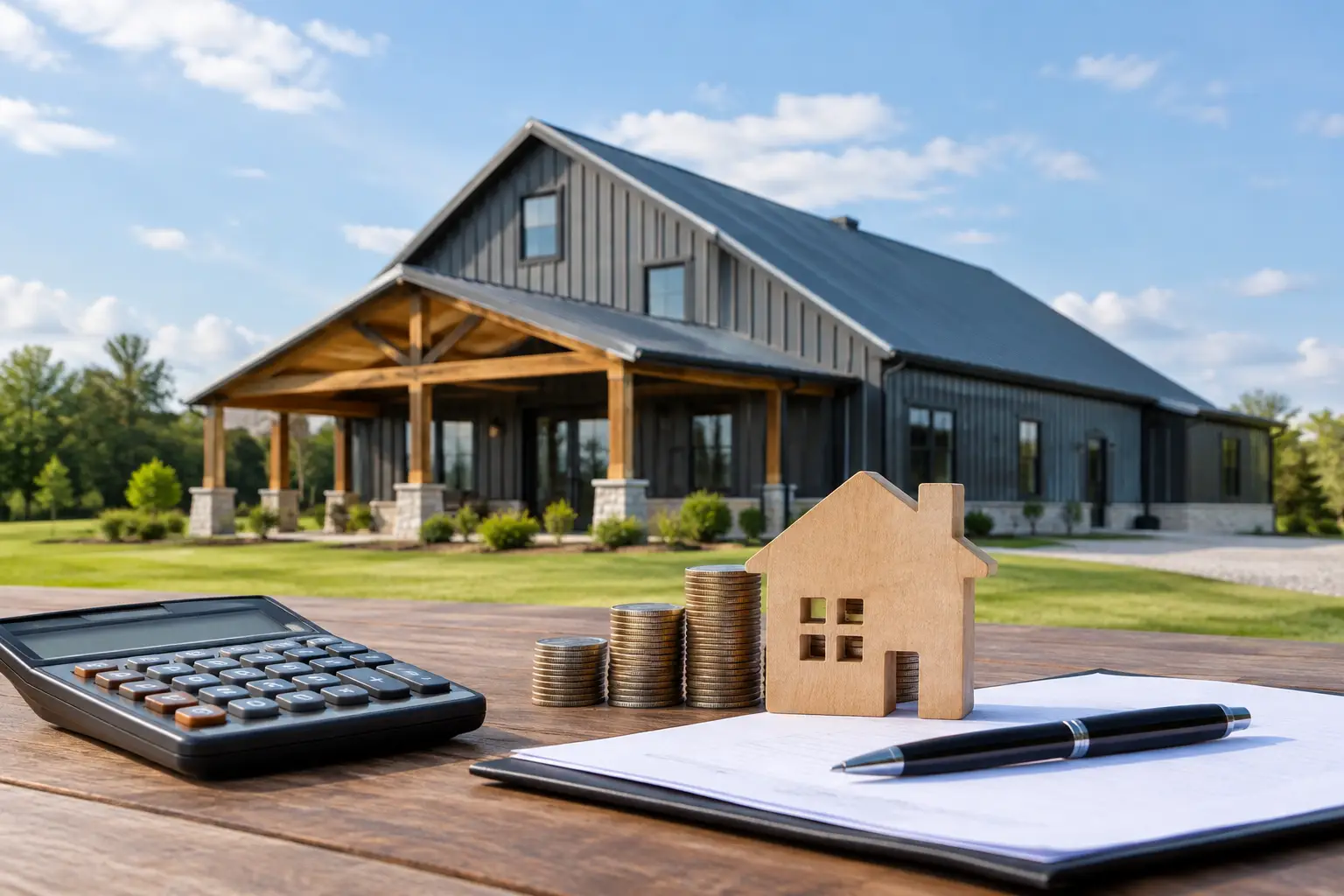
A finished barndominium can be financed much like a custom home, but the path to closing is usually more detailed. Lenders need confidence in the land, the plans, the contractor, the budget, and the finished value. Understanding barndominium construction financing options before finalizing your layout helps you make decisions that fit both your property and your loan approval.
For South Texas owners, financing often comes down to one practical question: can the lender clearly see what is being built, what it will cost, and what it will be worth when complete? A well-documented project with engineered plans, a defined scope of work, permit requirements, and a qualified contractor is easier to present than a loosely priced shell with interior work left unspecified.
The Main Barndominium Construction Financing Options
Most owner-occupied barndominium projects use a construction-to-permanent loan, a conventional construction loan, a land-equity loan structure, or cash combined with a smaller loan. The right option depends on whether you already own the property, your down payment, the home’s intended use, and the lender’s requirements for metal-frame or post-frame construction.
Construction-to-permanent loans
A construction-to-permanent loan is often the cleanest choice for a primary-residence barndominium. It funds the build during construction, then converts into a long-term mortgage after the home is complete and receives its certificate of occupancy. Instead of arranging separate construction and permanent loans, you complete one approval process and have one closing in many cases.
During the construction period, the lender releases funds in draws tied to completed work. A typical draw schedule may cover site preparation and foundation first, followed by the steel structure, roof and wall systems, rough mechanical work, insulation and interior finishes, then final completion. The exact number of draws varies by lender and project size.
The trade-off is documentation. The lender may require approved plans, a fixed-price construction contract, a detailed line-item budget, builder insurance, inspections before each draw, and an appraisal based on the completed home. For a fully finished barndominium, this extra structure can protect the owner as well as the lender because costs and scope are identified before work begins.
Stand-alone construction loans
A stand-alone construction loan finances the build for a limited term, commonly 9 to 18 months. When construction is finished, the owner obtains a separate mortgage to pay off the construction balance. This can make sense when a borrower expects rates to improve, plans to refinance under different terms, or has a lender that offers better construction financing than permanent mortgage terms.
The downside is that you face two loan events. You may pay closing costs twice, and your long-term financing is not locked in from the start. If rates rise, income changes, or the finished appraisal comes in lower than expected, refinancing can be more difficult. Borrowers choosing this route should leave room in the budget and avoid assuming the second loan is automatic.
Land equity as a down payment
If you already own your South Texas acreage, the equity in that land may count toward the required down payment. For example, a property owned free and clear or carrying a small balance may provide enough equity to reduce the cash needed at closing. This is especially useful for ranch owners or families building on land they have held for years.
The lender will order an appraisal for the land and determine how much equity can be credited. Do not assume county appraisal values or nearby land listings will match the lender’s value. Access, utilities, floodplain conditions, easements, road frontage, and usable acreage can all affect the result.
Conventional, portfolio, and local bank programs
Some conventional lenders finance barndominiums when the property is treated as a custom single-family residence and supported by comparable sales. Other lenders use portfolio programs, meaning they keep the loan in-house rather than selling it on the secondary mortgage market. Community banks and credit unions can sometimes be more familiar with rural property, owner-built land, and metal construction than a national lender.
That does not mean every local lender will finance every project. Some have minimum square-footage rules, restrictions on mixed-use space, limits on acreage, or requirements that a certain percentage of the structure be conditioned living area. Ask early whether the lender finances fully finished barndominiums, not just conventional wood-frame homes.
USDA, FHA, VA, and specialty programs
Government-backed programs may be available in the right circumstances, but they have specific rules. USDA financing can be useful in eligible rural areas for qualified borrowers, while VA construction financing may be an option for eligible veterans through participating lenders. FHA options exist through some lenders but can be harder to locate for new construction and nontraditional home types.
These programs are not a shortcut around project documentation. Lenders still need an approved builder, plans, inspections, and an appraisal that supports the completed value. Availability changes by lender, credit profile, location, and loan limits, so verify current program requirements before designing around a particular loan.
What Lenders Need for a Barndominium Build
A lender is not simply financing a metal building kit. It is financing a completed, habitable home on a permanent foundation. The more complete the construction package, the fewer unanswered questions remain during underwriting.
Expect to provide the land deed or purchase contract, a survey, preliminary title information, building plans, a site plan, and a detailed construction contract. The lender may also request a project budget showing foundation work, structural materials, labor, insulation, plumbing, electrical, HVAC, interior finishes, septic or sewer connections, well or water service, driveway work, and permit costs.
Engineered Texas PE-stamped drawings can be particularly valuable where wind loads, foundation design, code compliance, or permitting require clear structural documentation. A lender may also want proof of builder licensing where applicable, general liability coverage, workers’ compensation information, warranties, and references or project history.
The appraisal deserves special attention. Barndominiums can be appraised successfully, but comparable sales may be limited in some rural markets. A finished home with a well-defined living area, quality interior specifications, permanent utilities, and a permanent foundation is generally easier to value than a structure that appears partly residential and partly unfinished shop space. Keep the home design, contract price, and local resale reality in balance.
Budget for More Than the Building Shell
The most common financing problem is not the loan product. It is an incomplete budget. Steel framing, roof panels, and exterior walls are only part of the cost of a move-in-ready barndominium.
Your total project budget should account for site clearing, grading, drainage, soil work, concrete, utility extensions, electrical service, water, septic, driveway access, permits, engineering, insulation, HVAC, cabinetry, flooring, appliances, and contingency funds. On rural land, the distance to power and water can materially change the number. A long utility run or a difficult septic site can cost more than an owner expects.
For South Texas, climate performance should be included from the beginning rather than treated as an upgrade. Insulation levels, radiant barriers, roof color, ventilation, properly sized HVAC equipment, and sealed openings affect comfort and operating cost. If these items are necessary for the finished home, include them in the lender-approved scope instead of planning to add them after closing.
A contingency reserve is also sensible. The amount depends on site conditions and the level of finish, but the goal is straightforward: avoid stopping a project because an unplanned drainage correction, utility requirement, or material change consumes the remaining funds. Lenders may have their own contingency rules, especially for rural or custom construction.
How to Make Your Loan Application Stronger
Start lender conversations before purchasing land or signing a construction contract. Ask whether the lender accepts metal-frame barndominiums, whether it lends on your acreage size, what down payment it requires, and how it handles draws and inspections. Get those answers in writing when possible.
Then bring the lender a complete project, not a rough idea. A clear floor plan, exterior elevations, structural specifications, site details, and fixed or well-supported pricing make underwriting easier. Avoid changing square footage, finishes, or shop-to-living-area ratios repeatedly after appraisal has begun. Changes can require reapproval, revised plans, or a new valuation.
Your credit, debt-to-income ratio, cash reserves, and employment history still matter. Construction lending is typically more conservative than a purchase mortgage because the lender is funding work before a finished home exists. Keep major purchases, new debt, and unexplained account transfers to a minimum while your loan is under review.
If you are comparing contractor proposals, compare scope as carefully as price. One proposal may include engineered drawings, concrete, insulation, interior systems, permits, and final completion, while another may only cover the shell. A lower number is not a savings if it leaves major lender-required items outside the contract. DTF Metal Buildings & Fencing can help owners define a full design-build scope that is easier to price and present for financing.
Questions to Ask Before You Commit
Before selecting a lender, confirm whether the loan covers the land purchase, construction, and permanent mortgage in one package. Ask how many inspections and draws are included, whether interest is charged only on funds drawn, and how change orders are handled. Also ask whether you must use an approved builder list and what happens if weather or permitting extends the construction schedule.
Ask the contractor for a realistic timeline based on plan completion, permitting, foundation readiness, fabrication, erection, and interior work. Do not rely on a structural erection timeline as the full move-in timeline. A barndominium becomes a home through the coordinated completion of utilities, insulation, mechanical systems, finishes, inspections, and final approvals.
The best financing plan is the one that matches a complete, buildable project. Bring your lender detailed plans, a realistic all-in budget, and a contractor scope that accounts for South Texas site and climate conditions. That preparation gives you a better chance to close with confidence and build without costly surprises.